
Written by Chlo Farmer, Student Internship at Cohort 4
Every Monday Cohort 4 run a women’s Creativity Group which the women can attend to learn a new skill, socialise and take their mind off outside stresses. To some this may look like just a hobby, however, it has a deeper impact than I expected. Throughout the sessions I witnessed the women helping each other when needed, lifting each other up when some felt they couldn’t do it and checking in on each other after the weekend. Research details that creative activities provide individuals with a safe environment to process emotions and express feelings particularly those with trauma related memories (Al-Nouri et al, 2026). This allows for both reflection on emotions and release of these feelings as well as distraction depending on the individual and what they require. Creative outlets also are specifically beneficial in aiding mutual recovery from trauma which is explained as recovery between individuals that are working together in order to support and connect (Crawford et al., 2013).
Creativity in many forms such as art, theatre, writing and music has the power to bring people together despite their differing challenges and allows for them to express themselves in their own way. This can be seen in many peer-support groups such as ours at Cohort 4, which includes creativity of many forms that is interpreted differently by everyone. This can allow for a deeper understanding of your own emotions or an escape from the real world.
Embroidery at the Cosy Chapter
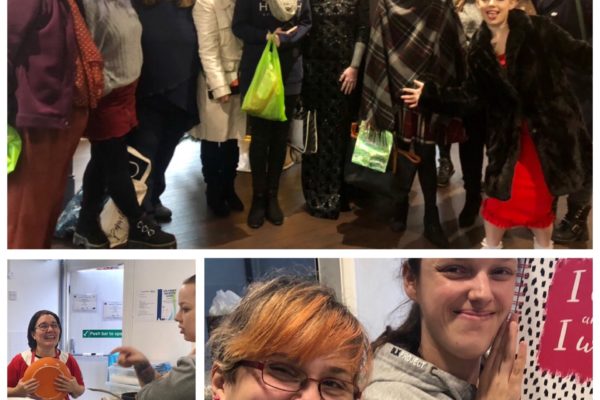
For me, the creativity session on the 9th of November 2026 in which we embroidered at a cosy café was a welcome distraction from the stresses of life and I left feeling lighter despite having not expressed my emotions outwardly. Here are some comments from the other group members on their thoughts when leaving the session:
“I thought it was absolutely brilliant. I really did because we could sit and chat.”
“I am on a real high to be fair after today because sometimes you just go through everyday things all the time don’t you. It was nice just to have that pick me up. It was nice surroundings, with good people and it was something we did and we chatted about it. It was lovely.”
“The cake and crumble was yummy.”
“It was a nice day out.”
“I have learned that I can sew better than I thought, but I can’t thread needles.”
“I’ve had a lovely day. I haven’t done any sewing for a long time so it gave me the confidence back and the atmosphere was just lovely. Really relaxing.”
“Our group feels approachable, welcoming and structured now.”
These comments show that everyone the session finding some benefit within creativity. Whether that’s a sense of calmness, feeling more confident, learning a new skill or just the feeling of not being alone.
References:
Al-Nouri, J., Feen-Calligan, H. and Grasser, L.R. (2026) ‘Art therapy in the treatment of traumatic stress: A narrative review’, Behavioral Sciences, 16(10). doi:10.20944/preprints202606.1467.v1. Available : Art Therapy in the Treatment of Traumatic Stress: A Narrative Review. – EBSCO
Crawford, P. et al. (2013) ‘Creative practice as mutual recovery in Mental Health’, Mental Health Review Journal, 18(2), pp. 55–64. doi:10.1108/mhrj-11-2012-0031.